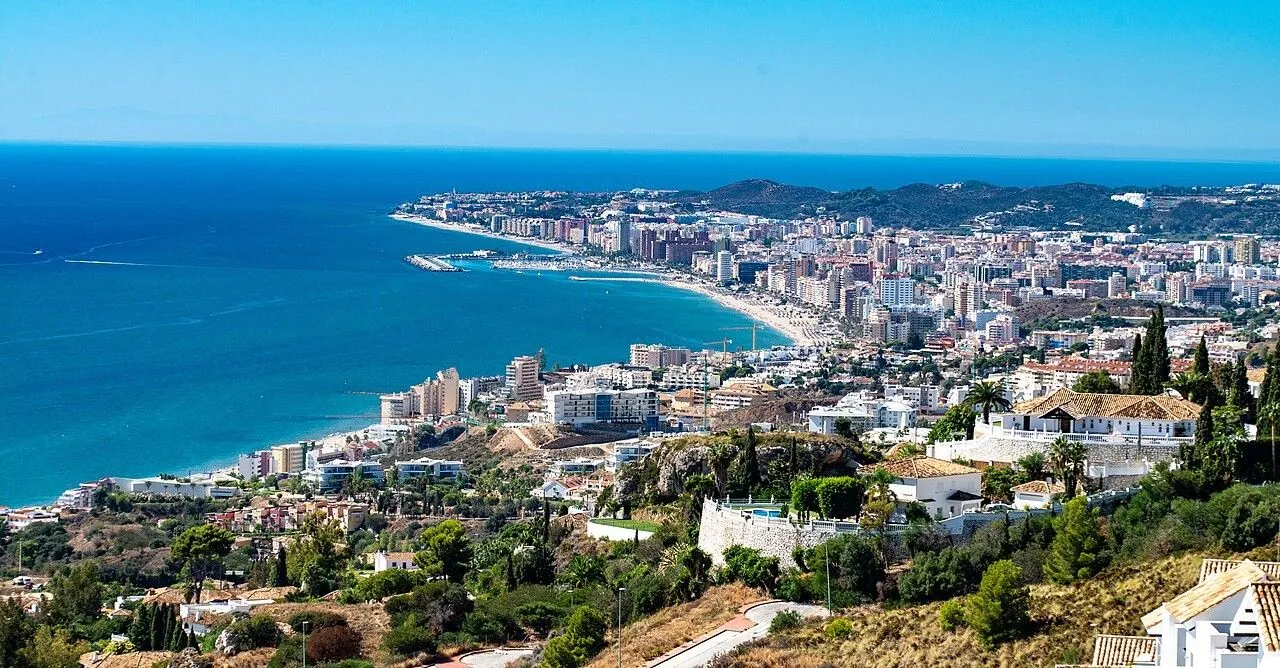
What to see in Fuengirola: a comprehensive guide to your visit
If you are looking for what to see in Fuengirola, you will find a city that combines urban beaches, historical heritage, gastronomy, family activities and one of the liveliest seafront promenades on the Costa del Sol.
Fuengirola is a municipality in the province of Málaga, located around 30 kilometres from the capital. Despite covering an area of only around 10 km², it has more than 82,000 inhabitants, a comprehensive range of services and seven kilometres of urban beaches awarded the Blue Flag.
Its compact size means that much of the city can be explored on foot. You can leave your car when you arrive, walk alongside the Mediterranean, visit Sohail Castle and Bioparc, have lunch near the marina and end the day in the historic centre without having to travel long distances.
In this guide, you will discover the essential places to visit in Fuengirola, activities to enjoy beyond the beach, recommendations on the best time to travel and different options for getting there and parking without complications.
Fuengirola: where it is and why it is worth visiting
For anyone wondering where Fuengirola is, the answer is simple: it is located in the province of Málaga, on the western Costa del Sol, between Benalmádena and Mijas. It is connected to Málaga by the AP-7 motorway, the A-7 dual carriageway and the C-1 commuter train line, which provides direct connections to the airport and Málaga city centre.
This location makes it easy to combine a few days at the beach with trips to other destinations in the province. From Fuengirola, you can quickly reach Mijas Pueblo, Benalmádena, Marbella, Málaga and different natural areas in the Sierra de Mijas.
Tourism in Fuengirola remains active practically throughout the year. Unlike other destinations that are especially dependent on the summer season, the city maintains a lively commercial, culinary and cultural scene during the quieter months.
A municipality with 300 days of sunshine a year
One of the main reasons to visit Fuengirola is its climate. As in much of the Costa del Sol, the area enjoys more than 300 days of sunshine a year and mild temperatures even during winter.
During the coldest months, the average minimum temperature is around 12°C, while in spring and autumn it is common to enjoy pleasant days with temperatures between 20°C and 25°C. These conditions are ideal for outdoor activities, dining on terraces and walking beside the sea at almost any time of year.
For this reason, tourism in Fuengirola is not limited to July and August. Winter can be a good time to explore the city at a relaxed pace, while spring and autumn allow you to enjoy the beaches, Bioparc and local gastronomy without the highest summer temperatures.
Small in size, big on services
Fuengirola covers an area of approximately 10 km², which is very small considering the number of services, accommodation options, restaurants and leisure facilities found within the municipality.
This compact size offers a practical advantage for travellers. Many of the places to visit in Fuengirola are relatively close to one another, particularly the seafront promenade, the marina, the historic centre, Plaza de la Constitución and Bioparc.
If you arrive by car, one of the most convenient options is to park at the beginning of your visit and continue on foot. This allows you to avoid unnecessary journeys, changing parking spaces and wasting time searching for somewhere to leave your vehicle in the busiest areas.
What to see in Fuengirola: the essential sights
Beaches, heritage, nature and a lively urban atmosphere all form part of the answer to what to see in Fuengirola. These are the places you should not miss on your first visit to the city.
The Rey de España Seafront Promenade
The Fuengirola seafront promenade, officially known as Paseo Marítimo Rey de España, runs alongside almost all seven kilometres of the municipality’s coastline and is considered the longest seafront promenade on the Costa del Sol.
The promenade connects different neighbourhoods and beaches, allowing visitors to discover much of the city beside the Mediterranean. Along the route, you will find sports areas, a cycle lane, children’s playgrounds, restaurants, ice cream shops, beach bars and terraces overlooking the sea.
It is particularly pleasant early in the morning and at sunset, when temperatures are milder and the promenade fills with local residents, sports enthusiasts and visitors. It is also a good starting point for walking to the marina, the city centre or some of the main beaches.
To begin your visit without wasting time searching for a parking space, you can leave your vehicle at Parking Paseo Marítimo, located beside the marina and just a few minutes’ walk from the centre.
Sohail Castle
Sohail Castle is one of Fuengirola’s most important historical and visual landmarks. It stands on a hill beside the mouth of the Fuengirola River, offering extensive views of the coastline and the Mediterranean.
The area has been occupied by different civilisations since ancient times, although the fortress that survives today is of Andalusian origin. The fortified complex was built in the 11th century on a strategic site previously used by the Phoenicians and Romans.
In addition to its historical importance, the castle has become one of the city’s main cultural venues. Concerts, themed markets and outdoor activities are held inside the fortress and on the surrounding hillside.
The Marenostrum Fuengirola venue, located in this area, hosts concerts by Spanish and international artists every summer. This makes Sohail Castle in Fuengirola a place where heritage, music and scenery come together.
Bioparc Fuengirola
Bioparc is one of the most recommended attractions for families, although its approach is also interesting for adults who are passionate about wildlife and conservation.
Bioparc Fuengirola follows an immersive zoo model. Instead of organising the visit around conventional cages, it recreates natural habitats and uses barriers integrated into the landscape to reduce the feeling of separation between visitors and animals.
The park is home to more than 200 species and recreates tropical ecosystems from Africa, Madagascar, Asia, Southeast Asia and the Indo-Pacific islands. During the visit, you can see gorillas, orangutans, Sumatran tigers, lemurs, pygmy hippos, reptiles and numerous bird species.
An average visit lasts approximately three hours. It is advisable to check the opening times, educational activities and any special experiences scheduled for your chosen day in advance.
The marina and local gastronomy
The Fuengirola Marina shares its setting and maritime atmosphere with the fishing port. Its location on the seafront promenade makes it a natural stop on any route through the city centre.
The area is home to terraces, cafés and restaurants overlooking the Mediterranean. Boat trips, coastal cruises and dolphin-watching activities also depart from this part of the city.
Fuengirola’s gastronomy has a strong connection with the sea. Grilled sardine skewers, fried fish, anchovies, squid and rice dishes are commonly found in beach bars and restaurants specialising in Mediterranean cuisine.
The presence of residents from numerous countries has also encouraged the development of a varied international culinary scene. You can find more recommendations in this selection of the best places to eat in Fuengirola throughout the year.
The beaches of Fuengirola
The beaches of Fuengirola extend along seven kilometres of urban coastline. The city has 7 main beaches: Carvajal, Torreblanca, Las Gaviotas, Los Boliches, San Francisco, Santa Amalia and El Ejido.
The entire coastline has received awards related to tourism quality, sustainability and accessibility. The city’s beaches have also been awarded the Blue Flag, a distinction that assesses aspects such as water quality, services, environmental information and safety.
Some of the best-known options include:
- Los Boliches, a lively, family-friendly beach located beside the former fishing district. Its surroundings, with more than 2 kilometres of coastline, are home to beach bars, shops, accommodation and numerous services.
- Santa Amalia, a wide, centrally located and well-equipped beach that is suitable for spending the day with the family and enjoying water sports.
- Carvajal, located at the eastern end of the municipality, with a slightly quieter atmosphere and a wide range of restaurants.
- El Ejido, close to Sohail Castle and the riverside park, making it a good option for combining the beach with a cultural visit.
To organise a family day out, you can also consult this guide on where to park in Fuengirola with children.
The historic centre and Plaza de la Constitución
The historic centre of Fuengirola is organised around Plaza de la Constitución and the Church of Nuestra Señora del Rosario. Although the city has experienced considerable tourism development, this area retains pedestrian streets, small shops, cafés and meeting places linked to local life.
Plaza de la Constitución in Fuengirola was the municipality’s first square and received its current name in 1841. One of its most recognisable features is a century-old ficus tree popularly known as the “Árbol de las Pelotillas”, located opposite the church.
The Teatro Salón Varietés is located nearby. The building was constructed in 1925 and has operated as an English-language theatre since 1985. It is considered the only permanent English-language theatre in southern Spain and reflects Fuengirola’s cultural diversity.
What to do in Fuengirola beyond the beach
If you are wondering what to do in Fuengirola besides sunbathing or swimming in the Mediterranean, you will find sporting, cultural and nature-based activities to complete your visit.
- Take a boat trip. Coastal cruises and dolphin-watching excursions depart from the marina. Sightings cannot be guaranteed, but the journey itself offers a different perspective of the coastline.
- Explore the seafront promenade by bicycle. The flat terrain and length of the route make it easy to travel between different beaches and neighbourhoods.
- Go hiking in the Sierra de Mijas. A few kilometres from the coast, there are routes of varying difficulty offering panoramic views of Fuengirola, the Mediterranean and other towns on the Costa del Sol.
- Try water sports. During the warmer months, activities such as kayaking, parasailing, paddleboarding and windsurfing are available.
- Visit the Finca del Secretario. This Roman archaeological site preserves the remains of thermal baths and an ancient villa occupied between the 1st and 6th centuries. Admission is free, and it remains one of the archaeological sites least known to many visitors.
- Discover the city’s urban art. Sculptures installed on different roundabouts, murals and artistic installations located throughout the city provide an alternative way to explore Fuengirola.
Tourism in Fuengirola can also serve as a starting point for discovering other destinations. Mijas Pueblo is around 20 minutes away by car, while Marbella and Málaga are both excellent options for a day trip.
Travellers planning to explore the province can consult the different car parks in Fuengirola and leave their vehicle in a location that makes it easy to visit the city and travel to nearby municipalities.
How to get to Fuengirola and where to park
To understand how to get to Fuengirola, it is useful to distinguish between public transport and travelling by private vehicle.
The C-1 commuter train line connects Fuengirola with Málaga-Costa del Sol Airport, Málaga-María Zambrano railway station and Málaga city centre. The journey from the airport takes approximately 34 minutes, while travelling from Málaga Centro-Alameda usually takes around 45 to 50 minutes, depending on the service and stops.
Fuengirola is also connected by Avanza intercity buses, which operate different routes along the Costa del Sol and allow passengers to travel from Málaga and other nearby municipalities. It is advisable to check the official timetables before travelling, particularly on public holidays or during busy periods.
If you are travelling in your own vehicle, you can reach the city using the A-7 dual carriageway or AP-7 motorway. Due to the municipality’s compact size, a practical option is to park when you arrive and continue exploring on foot.
For anyone looking for where to park in Fuengirola, Parking Paseo Marítimo offers a strategic location beside the marina, beaches and city centre.
The car park provides:
- 450 parking spaces.
- 24-hour opening and surveillance.
- Spaces for people with reduced mobility.
- Family parking spaces.
- Charging points for electric vehicles.
- Access to the city centre in approximately five minutes on foot.
The option to book online allows you to secure your parking space before beginning your journey. This is particularly advisable during summer, Easter, public holiday weekends, national holidays and dates when major concerts or events are taking place.
Fuengirola tourism throughout the year: when to visit and practical advice
Deciding when to visit Fuengirola depends on the type of trip you want to enjoy. The city remains active throughout the year, but each season offers a different experience.
Summer, from June to September. This is the period with the liveliest atmosphere on the beaches, in the beach bars, along the seafront promenade and in the nightlife areas. It also coincides with much of the Marenostrum Fuengirola programme and the concerts held beside Sohail Castle. During these months, it is advisable to book accommodation, activities and parking in advance.
Spring and autumn. Temperatures often range between 20°C and 25°C. There are fewer visitors, prices may be more affordable and it is more comfortable to visit Bioparc, explore the historic centre or enjoy the local gastronomy without the highest summer temperatures.
Winter. Fuengirola remains an active city thanks to its permanent population and large international community. With daytime temperatures usually ranging between 14°C and 17°C, it is a good season for walking, following cultural routes and organising trips to Mijas or Málaga.
Some practical tips for preparing your visit:
- In July and August, plan cultural visits for early morning or sunset.
- Check the municipal calendar before visiting markets or attending activities in Plaza de la Constitución, as dates and locations may change.
- The months between May and October usually offer better conditions for boat trips and dolphin watching.
- If you are travelling by car during a busy period, it is advisable to book parking online before you arrive.
Frequently asked questions about Fuengirola
Where exactly is Fuengirola?
Fuengirola is located in the province of Málaga, on the western Costa del Sol. It lies between Benalmádena and Mijas, around 30 kilometres from Málaga city and approximately 25 kilometres from Málaga-Costa del Sol Airport.
The city is connected to both locations by the C-1 commuter train line and can also be reached by road using the A-7 and AP-7.
How many days do I need to see Fuengirola?
One day is enough to see Fuengirola’s main attractions: Sohail Castle, the seafront promenade, one of its beaches, the marina and Plaza de la Constitución.
For a more complete experience, it is advisable to spend two or three days in the city. This will allow you to include a visit to Bioparc, explore Los Boliches, enjoy the local gastronomy and take a boat trip or excursion to Mijas.
What is Fuengirola most famous for?
Fuengirola’s most famous attractions are:
- Sohail Castle and its views of the Mediterranean.
- The Rey de España Seafront Promenade.
- Seven kilometres of urban beaches.
- Bioparc, one of the city’s main family attractions.
- Marenostrum Fuengirola, its major summer cultural and music event.
These places summarise much of what to see in Fuengirola during a first visit.
How can I park in Fuengirola without complications?
The easiest way to park in Fuengirola is to book a space before your journey and leave your vehicle in a location that allows you to continue exploring on foot.
Parking Paseo Marítimo is a centrally located option for anyone looking for a car park in Fuengirola close to the marina, beaches and historic centre. Booking in advance is particularly advisable during summer, Easter, public holidays and concert dates.
Fuengirola is waiting for you — and so is your parking space
Fuengirola brings together the Mediterranean atmosphere of the Costa del Sol, seven kilometres of beaches, an important historical legacy and activities to enjoy at any time of year.
Now that you know what to see in Fuengirola, all that remains is to prepare your itinerary. If you are travelling by car, the first step is to secure your parking space so that you can begin your visit without stress and explore the city comfortably on foot.