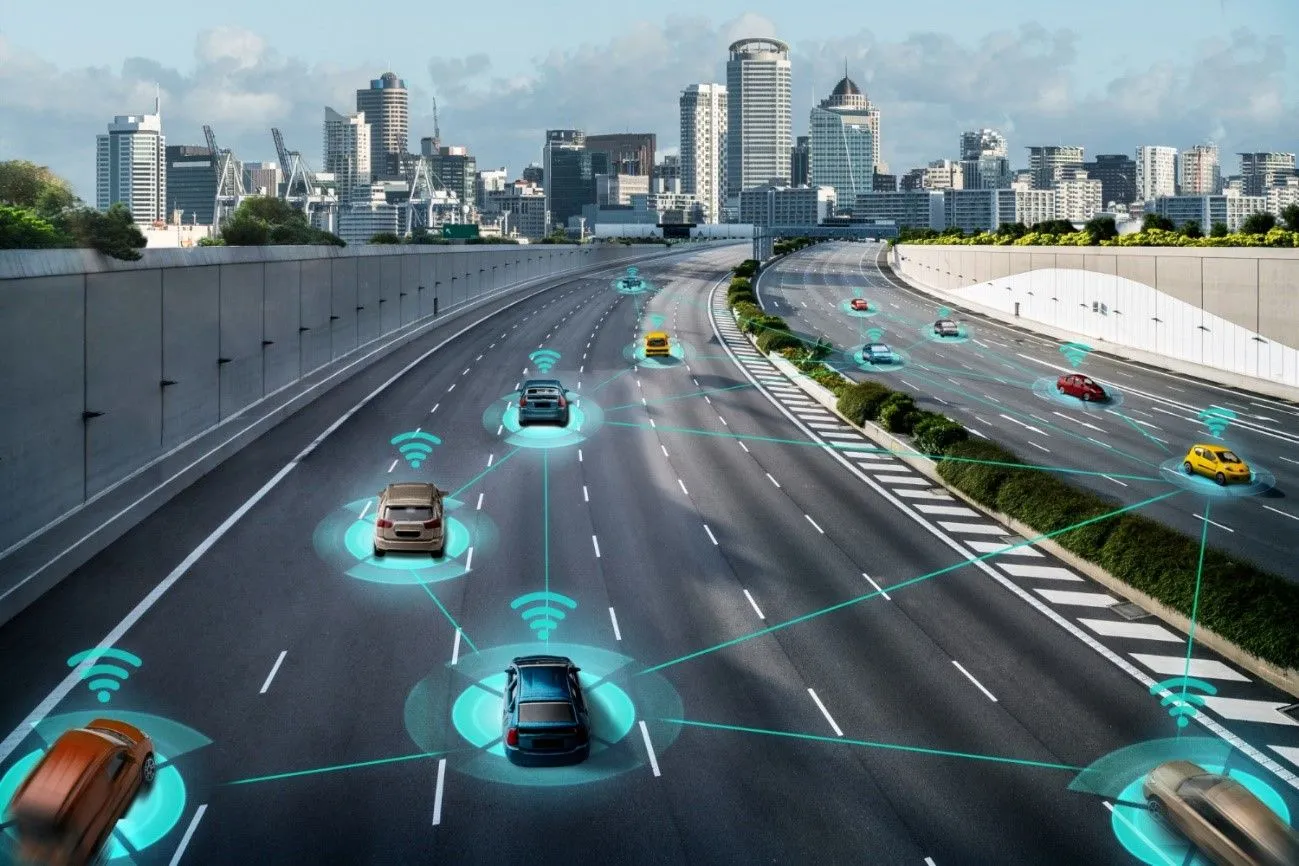
Autonomous driving
The transition to electric mobility is a major challenge for developed countries, and the same can be said of autonomous driving. In this regard, are we facing a double challenge that can be overcome, or is it a virtually impossible pipe dream to develop?
At APPARKYA, we will not answer that question directly, but instead we will set out the steps being taken in this area, both by public bodies and by the automotive industry itself, so that the reader can draw their own conclusions.
WHAT IS AN AUTONOMOUS CAR
A 100% autonomous car is a vehicle equipped with the computer and mechanical systems necessary to make any human intervention while driving unnecessary.
Therefore, 100% autonomous cars are capable of analysing their surroundings and, based on that analysis, making decisions and activating the mechanisms needed for the vehicle to move without creating any risk situation and while overcoming any unforeseen traffic circumstance.
The only thing the driver (so to speak) has to do is choose the destination they want to reach, without taking any control action over the vehicle, which means there is no possibility of human error. In this regard, it is worth remembering that statistics indicate that human error is present in around 90% of traffic accidents.
DIFFERENT EXISTING LEVELS OF AUTONOMOUS DRIVING ESTABLISHED BY THE EUROPEAN UNION
As of today, only a few models are 100% autonomous and all of them are still in the experimental phase. In this respect, the EU establishes five different classification levels for autonomous vehicles, according to the driving assistance systems they incorporate:
Level 0. The vehicle has no system capable of correcting the vehicle’s trajectory without the driver’s direct intervention.
Level 1. The car can automatically modify its trajectory longitudinally and laterally, but it cannot do both at the same time.
Level 2. The vehicle can automatically and simultaneously modify its longitudinal and lateral trajectory.
Level 3. The car controls itself almost entirely, but a human assistant is required and may be forced to intervene in certain specific situations.
Level 4. This is a 100% autonomous car, in which the human being only selects the destination.
INVESTMENT BY THE AUTOMOTIVE SECTOR TO ACHIEVE AUTONOMOUS CARS. WILL IT BE POSSIBLE TO ACHIEVE THIS WITHIN THE ESTABLISHED DEADLINES?
All leading companies in the automotive sector have research and development programmes for autonomous vehicles, or have invested in companies specialised in autonomous driving systems.
As for deadlines, everything depends on the development of the relevant legislation by Public Administrations and public bodies. By way of example, current DGT regulations only contemplate the circulation of level 1 and 2 autonomous vehicles, even though some manufacturers are already marketing level 3 vehicles in other countries.
IS THERE A RELATIONSHIP BETWEEN AUTONOMOUS DRIVING AND THE EUROPEAN ELECTRIC CAR PLAN?
The European Electric Car Plan is an initiative of the European Commission aimed at driving the transition towards clean and sustainable mobility, reducing greenhouse gas emissions and dependence on oil.
The plan includes measures to encourage the demand and supply of electric vehicles, improve charging infrastructure, support research and create an appropriate regulatory framework, which includes autonomous cars.
Specifically, the plan’s guidelines state that autonomous vehicles are a winning bet when it comes to achieving automated, intelligent and cooperative urban and interurban mobility.
CLIMATE IMPACT OF AUTONOMOUS DRIVING: WILL IT MEAN MORE OR FEWER EMISSIONS INTO THE ENVIRONMENT FROM CARS?
The argument used by those who defend the advantages of new mobility is that the environmental emissions of an electric autonomous vehicle while driving are zero. In addition, the energy efficiency of autonomous vehicles is higher than that of conventional electric cars.
However, there are critical voices arguing the opposite, based on the following reasoning:
The mass production of hundreds of millions of batteries will have a negative environmental impact with incalculable effects.
With current means, the production of the electrical energy needed to power the global vehicle fleet will increase emissions exponentially, unless clean ways of producing that enormous amount of electricity are found beforehand.
And who has the absolute truth in this debate about sustainable mobility? As of today, neither side. Only time will tell whether humanity is capable of overcoming the challenge posed by the total transition to electric or autonomous mobility.
Ultimately, the widespread adoption of autonomous driving will become a reality, sooner or later, but on one condition: the development of a sustainable electricity production and distribution network capable of meeting the energy needs of the entire vehicle fleet.