Sustainable mobility law: Key points to understand it
The new Sustainable Mobility Law, whose draft bill has already passed all the necessary procedures, is expected to be approved in the first quarter of 2023. It has already been approved twice by the Council of Ministers, and the more than 200 public objections received have been answered. Therefore, the final hurdle to overcome for its approval is obtaining the green light from the Congress of Deputies and the Senate.
The new law aims to change current transport models, setting out what they should look like in the future and aligning them with sustainable urban mobility. It is a project that is connected to the Sustainable Development Goals (SDGs) set out in the European Union’s 2030 Agenda, as well as with the UN and OECD frameworks.
SUSTAINABLE URBAN MOBILITY AS A RIGHT
This Sustainable Mobility Law is the flagship project of the Ministry of Transport, Mobility and Urban Agenda. Its main contribution will be to recognise, for the first time, mobility as a right and an element of social cohesion that contributes to the welfare state. Based on this concept, this text has been drafted with the aim of “better responding to the real needs of citizens and the challenges of the 21st century,” as stated by the Minister of Transport, Raquel Sánchez.
In addition, the law is linked to the Climate Change and Energy Transition Law, which was approved on 13 May. According to this text, cities with more than 50,000 inhabitants will have to establish a Low Emission Zone (LEZ). In other words, areas where vehicle circulation is reduced, with the main objective of cutting pollution. LEZs will mainly affect vehicles with combustion engines.
KEY POINTS OF THE NEW LAW
In fact, one of the main points of the Sustainable Mobility Law will be the possibility for city councils to establish a charge for driving within their respective LEZs. This is already the case in cities such as London, where drivers have to pay around 18 euros if they drive through the centre of the British capital.
Another key point will be the obligation for companies with 500 employees (or 250 per shift) to have sustainable urban mobility plans so that their workers can get to their workplace. This will also include measures to rationalise deliveries, especially with regard to so-called “last-mile urban distribution”: the final step in parcel delivery.
One of the biggest controversies generated during the debate on this law was the possibility of banning short-haul flights. The proposal was to prohibit these journeys whenever they could be made by train in less than three hours, such as those connecting Madrid with Alicante, Valencia and Seville. In the end, this measure was left out of the bill.
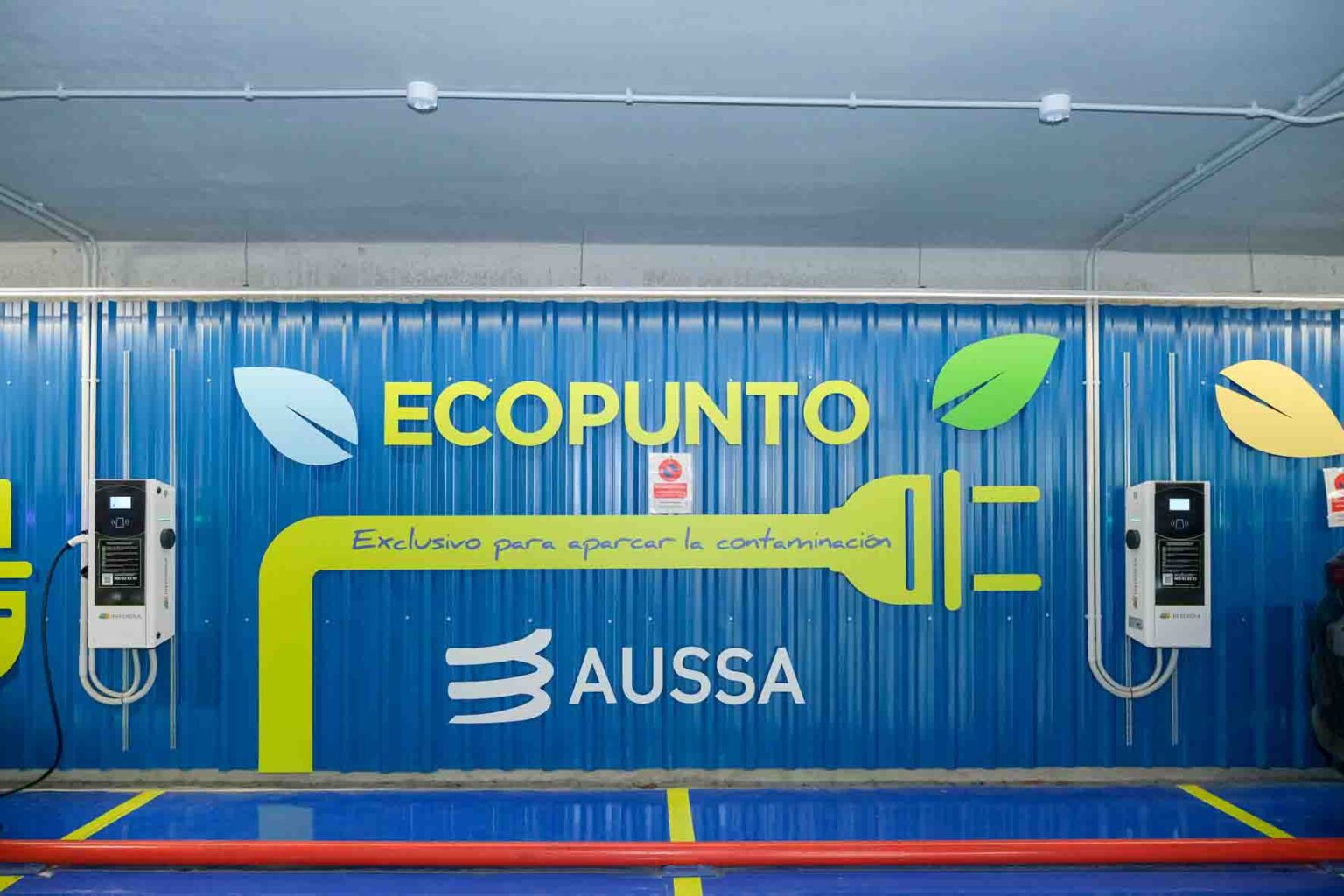
AUSSA’S COMMITMENT TO SUSTAINABLE URBAN MOBILITY
At APPARKYA, we are closely following the approval of this new law, as it is aligned with our commitment to sustainable urban mobility and the SDGs. We strive to highlight the benefits that using our services brings in reducing greenhouse gas emissions. In addition, we are committed to vehicle electrification through the installation of electric charging points in some of our car parks. We also promote new models of sustainable urban mobility, such as cycling, with the installation of Don Cicleto stations. And we continue working to achieve new goals in the global fight against climate change.