The mysteries of the mobility to come
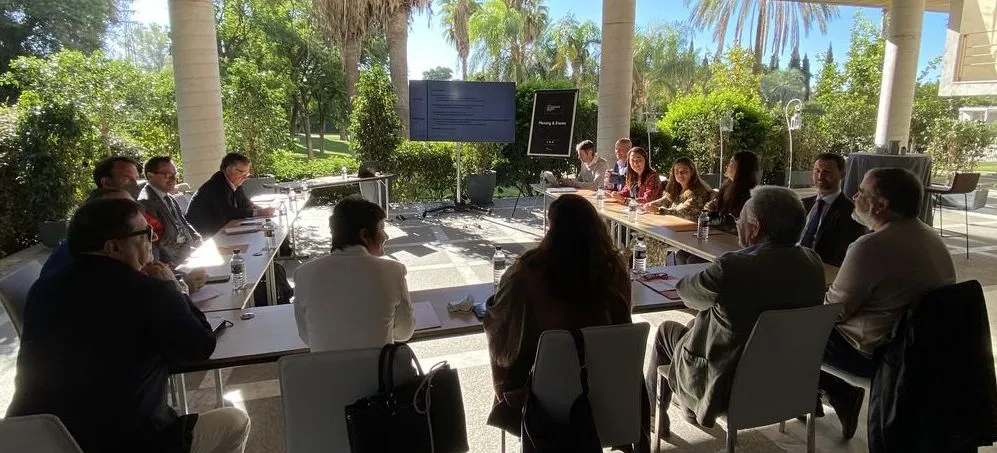
On November 4, the Urban Mobility Group was launched in Seville, promoted by Foro Marketing Sevilla and APPARKYA with an initial working breakfast.
These are working meetings held every four months, in which different aspects of urban mobility are discussed and how marketing works as a tool in the communication and promotion of new uses, influencing and improving citizens’ quality of life.
The working group is made up of José Carlos Cabaleiro, Managing Director of APPARKYA; as President, Rocío Tornay, President of Foro Marketing Sevilla; Jorge Diz, Manager of the Círculo de Empresarios de Cartuja; and as board members, Antonio Sánchez, APPARKYA’s Contracting and Marketing Manager, serving as board member and secretary, as well as an external board member with a relevant profile in the urban mobility sector. On this occasion, we were joined by Alfonso Carnerero, an urban architect with a career that brings a global perspective to the aspects discussed by the working group.
In this first session, entitled “The Mysteries of the Mobility to Come,” the importance of data became clear, showing that when combined with mobility, it begins to reveal where mobility may be heading in the future.
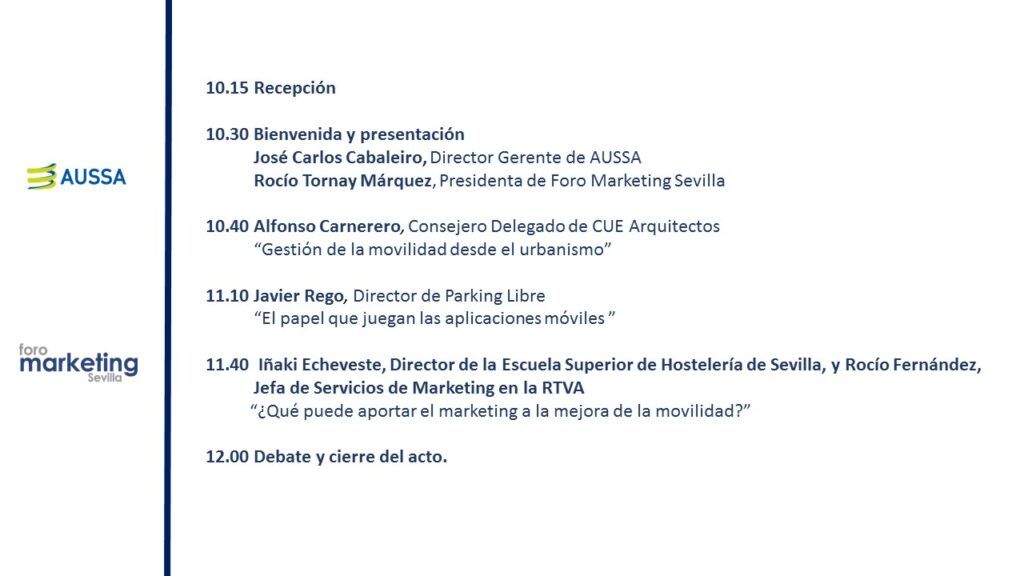
Alfonso Carnerero emphasized mobility as a pillar of sustainability, with a focus on urban transport and resource optimization, from three points of view: as a user, as a planner highlighting needs and limitations, and as a professional. He concluded that cities grow according to long-term planning, and that mobility seeks to respond to problems that were not properly planned for.
Javier Rego from Parking Libre, meanwhile, brought to the table how mobility apps have burst into the sector. In his speech, he highlighted that Spain is one of the leading countries in Europe, serving as a “guinea pig” for many international companies, and how most apps do not achieve profitability but instead serve as experiments and as a basis for drawing conclusions that can be applied to the rest of Europe. In this fierce competition among mobility apps, there is a market trend toward integrating apps so that the end user can plan different means of transport in a single app. He pointed out that the main problem lies in the fact that not all data is shared between the different apps, which makes the final user experience more difficult.
He also stated how companies not directly linked to mobility are entering the sector and indirectly selling different additional services, which reinforces the idea that digital mobility businesses are currently not profitable and that profitability will come hand in hand with additional or complementary services from other companies.
For her part, Rocío Fernández, Head of Marketing Services at RTVA, in response to the question “What can marketing contribute to improving mobility?” highlighted that “there is a need for an app aggregator focused on the user and on each user’s different mobility habits, emphasizing the need to analyze the different groups and establish specific action plans.”
Managing mobility opportunities begins with the needs of the community and the role the media play in conveying them. Communication should not remain a simple headline; it must go further. She highlighted how Canal Sur promotes brands that sell sustainability, with communication lines focused on social issues and values, and stressed the importance of raising awareness among children, and how they can influence their parents, with younger generations being more aware of shared mobility and new values.
On the other hand, she raised the eternal question of pay-per-use versus ownership, and how public transport options should be increased by communicating the values of each of the available alternatives. She highlighted how Canal Sur, through its own programs, seeks to educate and communicate awareness values and the opportunities that new mobility offers.
After the speeches, a round of questions and debate was opened on the topics discussed, in which all attendees shared their point of view; Rocío Tornay underlined the need to put ourselves at the service of the user.
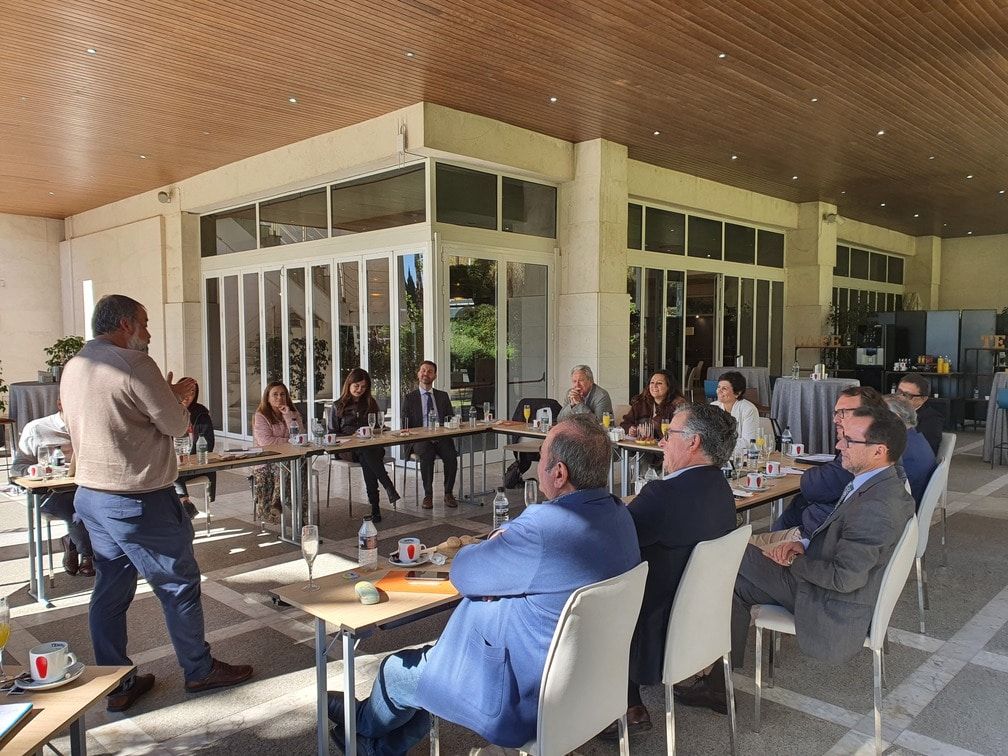
Andrés Mellado, Communication Consultant and Director of Extradigital Andalucía, stressed that in current times there is a high degree of communication but a lack of information.
Rubén García, Managing Director of TUSSAM, stated that mobility requires a response from all the stakeholders involved, emphasizing the importance of understanding the user’s point of view and that the key lies in convincing people to change their current way of getting around. He stressed that information and the ability to “communicate effectively” must be improved.
Joaquín Agreda, Managing Partner of IntelQualia, highlighted in his speech how the difficulty in communicating and monitoring public services causes the perception of private and public services to be very different, and how this perception makes different forms of communication necessary.
Other professionals also took part, such as Enrique Medina, Managing Director at Urbanos. Consultoría y Proyectos; Julián Sastre González, Partner & General Director of Consultora Alomon; Antonio Campos Alcaide, Arquitectura Campos Alcaide SLP; and the event was also attended by Victoria Guerle from the Seville Tax Agency, Ruth Fernández, and Carmen Alcaide from AUSSA.
After an engaging debate on all the topics discussed and the confirmation of the success of the chosen format, we thank all participants for attending, and we look forward to the next working breakfast of the Urban Mobility Group, which will be held in February 2022 to coincide with the 14th Mobility Conference organized by AUSSA, where we will continue seeking answers to the mobility of the future, or rather, to the mobility that has already become part of our daily lives.