Vertical mobility: will flying cars end up taking over our skies?
It’s the ultimate staple of any good science fiction story. We’ve been dreaming about the flying car ever since films like Blade Runner or Back to the Future showed us a world where our skies would be filled with vehicles. But reality is different from fiction — at least for now — because it’s still hard to imagine swapping asphalt for the clouds.
Even so, experts are strongly backing so-called vertical mobility or air mobility. While electric cars aim to replace combustion vehicles, a more distant future paints a picture in which the flying car takes centre stage. In forums and meetings of mobility experts, this idea is gaining more and more traction. And there are already many signs pointing in that direction.
JETSON ONE, THE FLYING CAR THAT DOESN’T REQUIRE A LICENCE
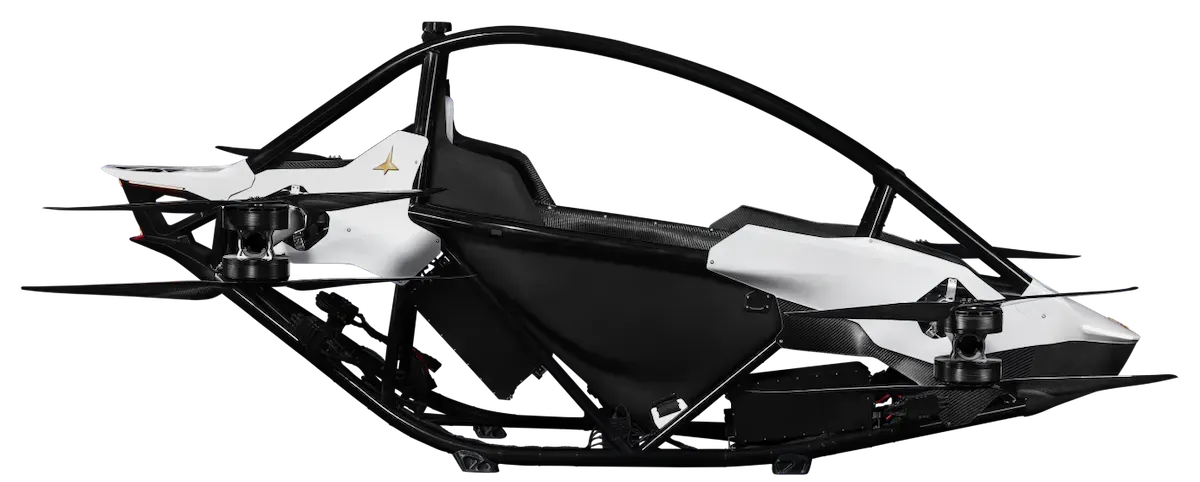
The biggest precedent is the millions that many companies are already investing in vertical mobility. A good example is the production of the Jetson One, a flying car that, for now, is only within reach of the wealthiest. Its price is around €86,000, and it’s also not suitable for anyone weighing more than 95 kg.
Its flight range is about 20 minutes and its top speed is 120 km/h. Despite these limitations, there are hardly any units left for sale. And the thing is, you don’t even need a licence to operate it. It’s controlled with a joystick, and it only takes a few minutes to learn how to fly it.
AIR TAXIS, THE REVOLUTION OF VERTICAL MOBILITY
Another clear precedent will be seen by New Yorkers soon. United Airlines announced in September the purchase of 200 air taxis that they will put into operation to connect Newark Airport with downtown Manhattan. And that’s only the beginning, because they are already studying the purchase of more air vehicles and the launch of new routes.
Some startups are even considering the creation of “vertiports” — pick-up hubs for these air taxis — which could be booked through a mobile app. Almost as simple as ordering a Cabify.
There are many signs pointing to the success of vertical mobility in the future, although it’s still too early to know whether it will overtake today’s models or simply play a secondary or residual role. But what is clear is that the flying car is already a reality, and we’ll have to see how far its adoption goes in the coming decades.