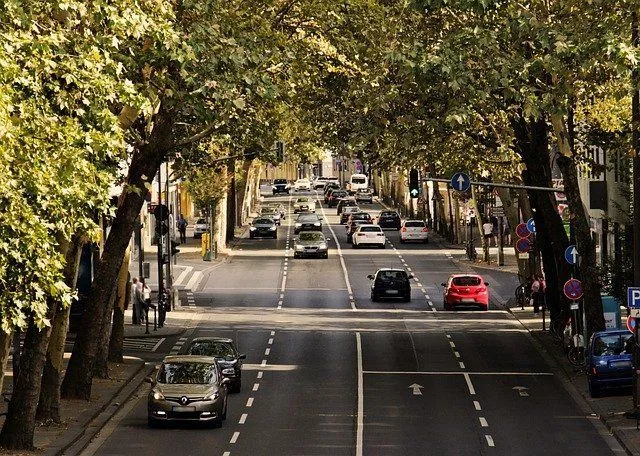
How the Low-Emission Zone (ZBE) will affect your city
If your city is one of the 149 in Spain with more than 50,000 inhabitants, from 1 January 2023 it will be among those affected by the Low-Emission Zone (ZBE). According to the Climate Change and Energy Transition Law of May 2021, all cities that meet this requirement will have to implement such a zone. According to Spain’s National Statistics Institute (INE), this will affect 25 million Spaniards — 53% of the country’s population.
The Low-Emission Zone aims to establish areas where vehicle traffic is reduced, with the main goal of cutting pollution. According to the WHO, nine out of ten people breathe polluted air.
WHICH CARS ARE AFFECTED BY THE LOW-EMISSION ZONE
ZBEs will mainly affect internal combustion engine vehicles, which currently make up 75% of the vehicle fleet. But you’ll need to take into account your vehicle’s sticker type:
Sticker A: passenger cars and light vans with petrol engines from before 2001, and all diesel vehicles from before 2006. For motorbikes, those registered before 2003.
Sticker B: all petrol vehicles registered from 1 January 2001 onwards or that meet Euro III, and diesel vehicles registered from 1 January 2006 onwards or that meet Euro IV and Euro V.
Sticker C: petrol vehicles registered from 1 January 2006 onwards or that meet Euro IV, Euro V or Euro VI, and diesel vehicles registered from 1 September 2015 onwards or that meet Euro VI.
These are the vehicles that could be most affected by the new regulations, especially those with sticker A, as they are the most polluting. Vehicles with a 0 or ECO environmental sticker will be the least affected.
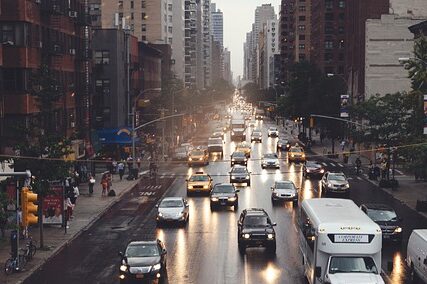
Each city will have the autonomy to set the conditions for what its ZBE will look like.
HOW CITIES WILL IMPLEMENT THE ZBE
Improving air quality, reducing noise, helping fight climate change, boosting energy efficiency… the goals of the Low-Emission Zone are clear, but there are still many doubts about how it will be implemented. The regulation mainly requires municipalities to ensure that “access and circulation criteria must be aimed at discouraging as much as possible the access of private motor vehicles in general, regardless of the environmental badge they hold”. For this reason, it will be each city’s responsibility to apply these rules to meet those objectives, so it’s expected that each one will do it in its own way. The affected area, the exceptions, and which types of vehicles will be more or less affected will all depend on each city.
In fact, cities such as Madrid and Barcelona have already implemented a Low-Emission Zone, which may serve as an example of how they will be rolled out in other cities. In Madrid, for example, there is an exception allowing sticker B and C cars to access the ZBE if they are going to a car park. Something that, presumably, will be the same elsewhere.
AUSSA CITIES WITH LOW-EMISSION ZONES
In Seville, something similar is already underway: the Respira Plan. Although it is still in its initial phase and does not apply fines to those who fail to comply. This plan restricts access to the city centre and the Triana neighbourhood, where two of our car parks are located (Mercado del Arenal car park and Mercado de Triana car park), but access is allowed for all vehicles if they are going to park there.
In Granada, where APPARKYA has the Hermanos Marista car park in the city centre, they have already planned what the Low-Emission Zone will look like, including 18 new cameras to control vehicle access. And Fuengirola, where APPARKYA manages the Paseo Marítimo car park, will also need to adapt to this new law, as it has more than 50,000 inhabitants.